

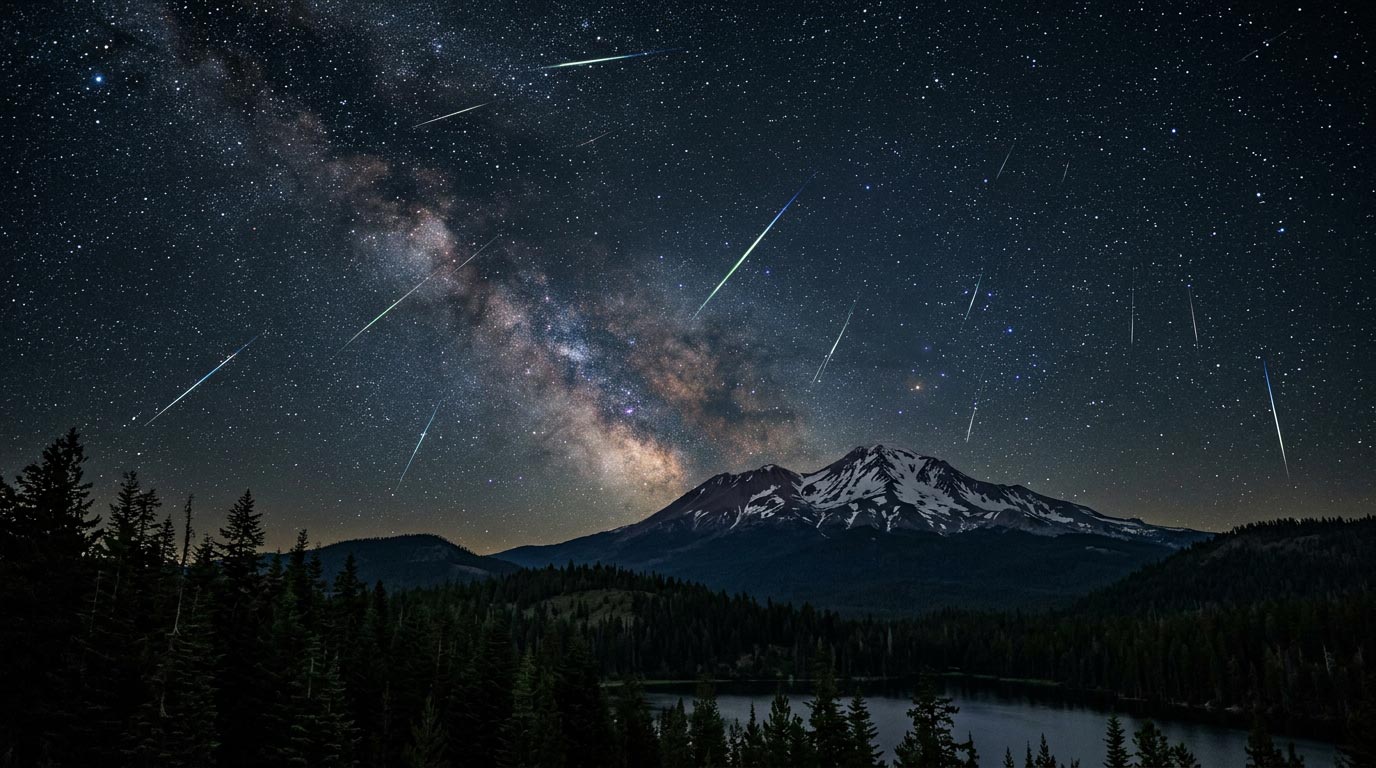
On clear summer nights, Siskiyou County offers some of Northern California’s most memorable dark-sky scenery. In 2026, the annual Perseid meteor shower is especially worth planning around because its peak arrives with a new moon, leaving the sky unusually dark. From Lava Beds National Monument to the forests and open horizons around Mount Shasta, visitors have several striking places to watch the show. This guide explains when to look, where to go, what to bring, and how to enjoy the Perseids responsibly.
Why the 2026 Perseid Meteor Shower Is Special
NASA identifies the evening of August 12 into the early morning of August 13 as the 2026 Perseid peak. The American Meteor Society lists the shower as active from July 17 through August 24, so visitors may still see Perseids on nights before and after the maximum. The new moon on August 12 is the major advantage this year because bright moonlight will not wash out as many faint streaks.
The Perseids occur when Earth passes through debris left by Comet 109P/Swift-Tuttle. The particles enter the atmosphere at high speed and appear as brief streaks of light. The American Meteor Society notes that rural observers commonly see about 30 to 50 Perseids per hour near maximum, although actual counts depend on clouds, wildfire smoke, artificial light, the horizon, and viewing time. A telescope is not needed; the unaided eye gives the widest view.
Best Time to Watch the Perseids in Siskiyou County
Begin watching after the sky becomes fully dark on August 12. A few long meteors may appear earlier, but activity generally improves from midnight through the hours before dawn as the Perseus radiant climbs higher. NASA recommends looking generally toward the northeast after dark, while remembering that meteors can flash across any part of the sky.
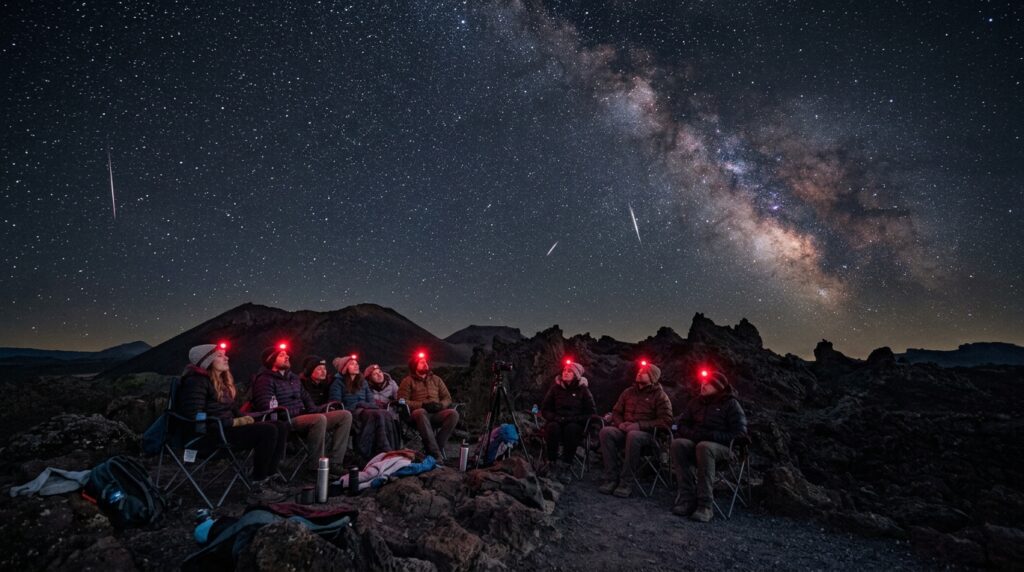
Arrive before sunset so you can inspect the parking area and walking route in daylight. Once settled, allow about 30 minutes for your eyes to adjust. Avoid checking a bright phone screen, and choose a viewpoint with a broad section of open sky rather than focusing only on Mount Shasta or Perseus. If clouds interfere on the peak night, try another clear night within the shower’s active period.
Best Places to Watch the Perseids in Siskiyou County
Lava Beds National Monument
Lava Beds National Monument is one of the county’s strongest stargazing choices. The National Park Service describes its starry skies as ideal for amateur astronomers, and the monument is open to visitors throughout the year. Its remote setting and wide horizons can provide excellent visibility. Check current alerts before leaving, use established roads and parking areas, and keep nighttime stargazing separate from cave exploration.
Mount Shasta and the McCloud Area
The Mount Shasta and McCloud region combines dark skies with dramatic mountain scenery. Bunny Flat and other established recreation areas are associated with local stargazing, but road, parking, fire, and wilderness rules can change. Review the Shasta-Trinity National Forest current conditions before selecting a site. Higher elevations can become cold after a hot August day, and not every pullout permits overnight parking.
Lake Siskiyou and Shasta Valley Viewpoints
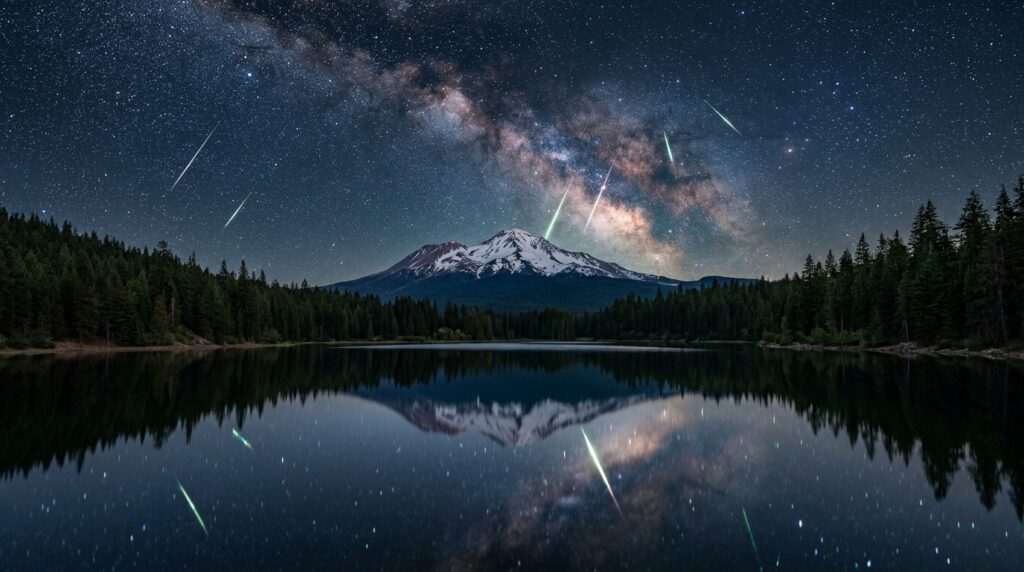
Lake Siskiyou can frame the night sky with a reflection of Mount Shasta, making it appealing for viewing and photography. Access varies around the lake, so use a campground, lodging property, or public area where nighttime use is clearly allowed. Farther north, designated viewpoints across Shasta Valley offer broad horizons and less local light. Never stop on an interstate shoulder or block a road for a photograph.
Developed Campgrounds and Rural Lodging
A developed campground or rural lodging property may be easiest for families because it reduces late-night driving. Ask the host about quiet hours, outdoor lighting, and safe places to sit. For daytime ideas that pair well with stargazing, explore our Siskiyou County outdoor adventures and seasonal experiences.
Join a Local Mount Shasta Stargazing Event
Visitors who prefer an organized experience can check the Mount Shasta Stargazers Star Party listed for August 14. Discover Siskiyou describes it as a free gathering at a dark viewing site near McCloud. Because event locations, weather plans, and access details can change, review the organizer’s current information before traveling. A star party can also help beginners identify constellations, planets, galaxies, and star clusters through telescopes after the main Perseid peak.
How to Prepare for a Safe Night Under the Stars
Check Weather, Smoke, Roads, and Fire Restrictions
A clear forecast is only one part of planning. Wildfire smoke can reduce visibility even without clouds, while road work or fire restrictions may affect recreation sites. On the day of the trip, review the National Weather Service Medford office, the AirNow Fire and Smoke Map, and the relevant land manager’s alerts. Tell someone where you are going, download directions, and avoid relying on cellular service in remote areas.
Bring Simple, Practical Gear
Pack a reclining chair or blanket, warm layers, closed-toe footwear, water, snacks, and a charged phone. A red-light headlamp is better than a bright white flashlight once everyone is settled. Bring a paper or offline map for remote areas. Leave campfires, candles, and fireworks at home, and follow every posted fire rule.
Protect Your Night Vision and the Landscape
Dim screens before arriving and use red light only when necessary. Park so headlights will not sweep across other observers, keep noise low, and pack out everything you bring. Stay on durable surfaces, respect closures and private property, and follow Leave No Trace principles. These habits protect the landscape and help everyone enjoy the same dark sky.
Simple Tips for Photographing Perseid Meteors
Use a sturdy tripod and frame a wide section of sky with a recognizable foreground such as Mount Shasta, a lake shoreline, or pines. Start with a wide aperture, high ISO, and an exposure of roughly 10 to 20 seconds, then adjust after checking the stars for blur and the foreground for brightness. Focus manually on a bright star or distant light before the sky becomes fully dark.
A remote shutter or short timer can reduce camera shake. Turn off the flash, capture repeated frames, and be patient because a meteor may appear anywhere. Smartphone users can try night mode with the phone secured on a small tripod. A memorable image often comes from many attempts rather than a single exposure.
Plan a Siskiyou County Stargazing Getaway
The 2026 Perseids offer a timely reason to experience Siskiyou County after sunset, but the best trip balances skywatching with safe access and flexible planning. Choose a legal viewing area, verify conditions on the same day, arrive before dark, and allow enough time to watch without rushing back onto mountain roads.
During daylight, visitors can explore nearby towns, lakes, trails, and volcanic landscapes. Browse our Siskiyou County travel blog for more ideas, or learn more about our guide to Siskiyou County. With dark skies, a comfortable chair, and patience, the Perseid peak can become one of the most memorable nights of summer.